• Hello guest! Are you an Apistogramma enthusiast? If so we invite you to join our community and see what it has to offer. Our site is specifically designed for you and it's a great place for Apisto enthusiasts to meet online. Once you join you'll be able to post messages, upload pictures of your fish and tanks and have a great time with other Apisto enthusiasts. Sign up today!

A. sp. 'Abacaxis'

Hans

New Member
Messages
7
Location
The Netherlands
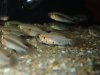
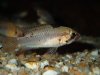
In the first picture you see one of the young male A. sp. 'Abacaxis'. This individual is all over black spots. It is the only one of all the offspring (see the second picture). Somebody told me that these spots are caused by a virus. But that seems unlikely, because he is the only one with these spots. Does anybody know the exact story about the spots?
 

Attachments

  • P2280023.JPG
    P2280023.JPG
    7.7 MB · Views: 578
  • P2280026.JPG
    P2280026.JPG
    7.7 MB · Views: 584

Mike Wise

Moderator
Staff member
5 Year Member
Messages
11,871
Location
Denver, Colorado, U.S.A.
Interesting, we normally see this black spot syndrome mostly on wildcaught apistos from Peru. Did you breed these fish in your aquarium? Whatever the cause, it doesn't seem to harm the fish. I still have a male A. cf. luelingi (Cristal) in my aquarium which I brought back from Peru in 2012.
 

MickeM

Active Member
5 Year Member
Messages
441
Location
STOCKHOLM , SWEDEN
In this enclosed thread you can see some pics of an "Abacaxis"-female(wild 2012/13) with few, but similar tendences/signs in the pigmentation..white/black..
(When the pair arrived at first and she was not as yellow.. it looked more distinct/odd than in these pics..)
But, I have observed this mostly on wild Apistogrammoides pucallpaensis from Peru.. and quite often too..

A pigmentation-"failure" that look like this is often occuring on some southamerican+african killi-fishes we are breeding in my local Killi-Club.. at least if they are mainly raised up on BBS (Live Artemia).
It may then be changed back to normal colors in/on juveniles/growing fishes.. if fed with some common basic flakefood for a month or two!!!
In this case it `s probably caused by lack of some specific nutrients when bringing them up!!??

If not a virus or else...Maybe the possibility to develope this aberrancy on wild fishes are more connected to their genetic heritage than to what food is present/available in the Nature??
(..or maybe not????)

http://www.apistogramma.com/forum/t...basement-with-planted-tanks.17497/#post-94500
 

Robi

Member
Messages
42
Location
Minneapolis
I lean towards infectious (? viral) cause. I had several Apistos from Peru with these black spots and lately I started seeing it in some of the captive tank raised Apistos, that did not have black spots previously for sure. The most extreme example was when I paired off a czech triple cacatuoides with a wild caught female (which had the spots) and after a while the captive male started having black spots too. So I definitively vote for something, that is contagious.
 

MickeM

Active Member
5 Year Member
Messages
441
Location
STOCKHOLM , SWEDEN
OK Robi .. interesting info... did your fishes die quickly or continue to live a regular life??

Sometimes I have seen fishes of several different families/generas getting whole/larger parts of their bodies "blackned"(?) and die in a month or so....
..then it was showing on approx. 25-50% of the body (severe tissue+/partial internal cellular damage I guess!!)... and often on one side(left/right) only.., not "spot-wise" ..!!
 

Robi

Member
Messages
42
Location
Minneapolis
They continued to have a happy long life... these are just tiny spots, sporadic and few. I am not concerned, just saw this tread and thought I mention it...
 

MickeM

Active Member
5 Year Member
Messages
441
Location
STOCKHOLM , SWEDEN
I found this video on the web today.. Have a look at the female.. One "good" example of the "Black spot syndrome"..

 
Last edited:

Robi

Member
Messages
42
Location
Minneapolis
Wow Mike! that's impressive… my big cf cacatuoides male that got the black spots has spots like this male on a video, few and small spots. Now I separated him from the wc female that brought in the spots and he had spawned with another cf. female. Let's see... I'd be curious to see weather he passes on the posts to any other fish..

thx Mike

Robi
 

Members online

Forum statistics

Threads
18,707
Messages
124,196
Members
13,591
Latest member
flanormimar

Latest profile posts

Platforma SaldeoSMART automatyzuje obieg dokumentów i odczyt faktur (OCR) w firmach oraz biurach rachunkowych. System jest gotowy na zmiany prawne, a integracja z ksef pozwala na bezpieczne wysyłanie i odbieranie e-faktur ustrukturyzowanych.
dimandobson wrote on Ben Bergman's profile.
Hi Bergman. I have a pair of breeding dwarf cichlid for sale. if you are still looking, drop me your whatsapp number and i will send some videos to your whatsapp
Good-backlink.com - Professional website promotion, get more traffic to your website and improve ranking by using high PR link building service.
martin_c wrote on illumnae's profile.
Hi,

just in case you happen to live in Germany (or Netherlands): I have a wildcaught female A. psammophila, you could have it for free. I have no use for it anymore.

BR
Martin
Top