Hello guest! Are you an Apistogramma enthusiast? If so we invite you to join our community and see what it has to offer. Our site is specifically designed for you and it's a great place for Apisto enthusiasts to meet online. Once you join you'll be able to post messages, upload pictures of your fish and tanks and have a great time with other Apisto enthusiasts. Sign up today!
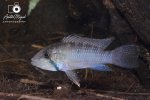
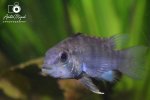
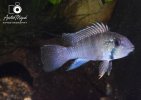
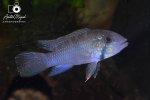
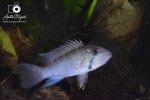
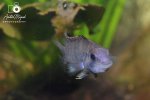
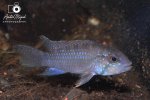
A. sp. "Ipiranga" is a barlowi-complex species from western Brazil. Other than A. sp. "Elzeniense", found near Manaus, this species is located farther east than any other now known barlowi-complex species. We know very little about Ipiranga, not even if it mouthbroods at times.
A. sp. "Ipiranga" is a barlowi-complex species from western Brazil. Other than A. sp. "Elzeniense", found near Manaus, this species is located farther east than any other now known barlowi-complex species. We know very little about Ipiranga, not even if it mouthbroods at times.
A. sp. "Ipiranga" is a barlowi-complex species from western Brazil. Other than A. sp. "Elzeniense", found near Manaus, this species is located farther east than any other now known barlowi-complex species. We know very little about Ipiranga, not even if it mouthbroods at times.
How aggressive are your Ipiranga? I put a juvenile pair in a 40G breeder with a good amount of wood, leaf litter, and botanicals, but the female frequently chased the male and eventually killed him (or so I suspect).
Not sure what I should do with the lone female now.
Do you want the female? Alex doesn't have any more, unfortunately, and I'd prefer that the fish goes to someone who actively breeds them.
How aggressive are your Ipiranga? I put a juvenile pair in a 40G breeder with a good amount of wood, leaf litter, and botanicals, but the female frequently chased the male and eventually killed him (or so I suspect).
Not sure what I should do with the lone female now.
Do you want the female? Alex doesn't have any more, unfortunately, and I'd prefer that the fish goes to someone who actively breeds them.
How aggressive are your Ipiranga? I put a juvenile pair in a 40G breeder with a good amount of wood, leaf litter, and botanicals, but the female frequently chased the male and eventually killed him (or so I suspect).
Not sure what I should do with the lone female now.
Do you want the female? Alex doesn't have any more, unfortunately, and I'd prefer that the fish goes to someone who actively breeds them.
@mk_0816 I bought a pair from Alex several months ago. Unfortunately, the female past away. The remaining male has been lonely. If you still have the female, I would love to relocate her. PM me if you do, we can work out the details. Thanks!
A. sp. "Ipiranga" is a barlowi-complex species from western Brazil. Other than A. sp. "Elzeniense", found near Manaus, this species is located farther east than any other now known barlowi-complex species. We know very little about Ipiranga, not even if it mouthbroods at times.
It definitely mouth broods as by the time i see the frys they are already quite large and sturdy - and almost none die but the brood is always smallish around 15ish.
I can make a few comments about this species based off my pair:
they are friendly enough but once maturity and bonding occurs (they appear to be pair bonding) deaths can suddenly occur to other members. My pair have bred several times and as far as I can tell they are definitely mouth brooders and the released frys are fairly large with the count small but the success rate of those release being very high. I currently have two adults with around 14 to 18 off springs - some of the off springs are approaching adulthood and i begin to think maybe there might be an eventual issue - the spawns where male heavy at 78ish so i have lower the temp a degree or two in case they breed again to see if they will generate more females. The tank is 65 (48x16).
-
Originally i started with 2 females and 2 males - every day i fed them all 4 would be close proxmity and no obvious aggression and then one day i went down and the 2nd male was dead (i presumed killed) - the 2nd female went into hiding. Many months later (6? 8?) she showed her self briefly trying to persuade the male to switch partner and then after chased off went back into hiding. She could very well still be alive but i have my doubts (i gotta figure out a way to make these aquariums have detectors for live hiding fishes). i recently removed a couple of the f1 to give to someone but have some left (though mostly males). The original pair i think is close to 2+ years old with owner ship now over 18 months. I've not heard of other people breeding them so i'm unsure. For now i will leave them in the 65 and i guess let them sort it out but when i move in approx 22 months i will try to improve their situation - maybe setup a 2nd tank with another pair. They are not flashy but they are very calm fish showing no nervousness.
If someone needs a male i could probably snag one but each time i try to catch one it gets harder as they become more aware of the evil net.
Hi Bergman. I have a pair of breeding dwarf cichlid for sale. if you are still looking, drop me your whatsapp number and i will send some videos to your whatsapp
just in case you happen to live in Germany (or Netherlands): I have a wildcaught female A. psammophila, you could have it for free. I have no use for it anymore.