• Hello guest! Are you an Apistogramma enthusiast? If so we invite you to join our community and see what it has to offer. Our site is specifically designed for you and it's a great place for Apisto enthusiasts to meet online. Once you join you'll be able to post messages, upload pictures of your fish and tanks and have a great time with other Apisto enthusiasts. Sign up today!

I.Adoketa breeding.

QuangDienvn

New Member
Messages
3
Chào mọi người.
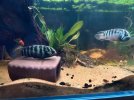
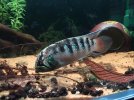
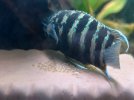
Đây là lần thứ hai tôi thất bại trong công việc nhân giống I.Adoketa.
Cả hai lần quá trình sinh sản đều diễn ra thuận lợi, cá đực và cá cái thay phiên nhau đẻ trứng và thụ tinh trứng.
Tuy nhiên, chỉ sau khoảng 6 tiếng, một số trứng bắt đầu chuyển sang màu trắng nhạt, và hiện tượng này tăng dần các trứng còn lại.
Các thông số tôi thu được:
- Độ pH: ~ 6
- TDS: ~ 63 PPM
- Nhiệt độ: 23°C
Tôi sử dụng nước RO có hàm lượng TDS thấp (~10ppm).
Vậy, có phải tôi đã làm sai điều gì đó, hay là có vấn đề gì đó với cặp cá này ?
Cảm ơn bạn đã phản hồi.
 

Attachments

  • Female with eggs.jpg
    Female with eggs.jpg
    419.6 KB · Views: 55
  • Male & Female.jpg
    Male & Female.jpg
    933.1 KB · Views: 58
  • Male.jpg
    Male.jpg
    747.4 KB · Views: 51

anewbie

Well-Known Member
5 Year Member
Messages
2,702
google translate indicate this is Vietnamese - a rarity on these forums:

Hello everyone,
This marks my second failed attempt at breeding *I. adoketa*.
On both occasions, the spawning process proceeded smoothly, with the male and female taking turns laying and fertilizing the eggs.
However, after just about six hours, some of the eggs began to turn a pale white, and this phenomenon gradually spread to the remaining eggs.
The water parameters I recorded were:
- pH: ~6
- TDS: ~63 ppm
- Temperature: 23°C
I used RO water with a low TDS level (~10 ppm).
So, did I do something wrong, or is there an issue with this specific pair of fish?
Thank you for your feedback.
 

anewbie

Well-Known Member
5 Year Member
Messages
2,702
I've not kept these but from what I have read your water needs to be softer and perhaps more acidic. While probably not an issue they recommend the temperature closer to 26 or 27c.
 

QuangDienvn

New Member
Messages
3
google translate indicate this is Vietnamese - a rarity on these forums:

Hello everyone,
This marks my second failed attempt at breeding *I. adoketa*.
On both occasions, the spawning process proceeded smoothly, with the male and female taking turns laying and fertilizing the eggs.
However, after just about six hours, some of the eggs began to turn a pale white, and this phenomenon gradually spread to the remaining eggs.
The water parameters I recorded were:
- pH: ~6
- TDS: ~63 ppm
- Temperature: 23°C
I used RO water with a low TDS level (~10 ppm).
So, did I do something wrong, or is there an issue with this specific pair of fish?
Thank you for your feedback.
Yes, i am from Vietnam.
 

Members online

Forum statistics

Threads
18,703
Messages
124,172
Members
13,590
Latest member
jukaklimatyzacje

Latest profile posts

Platforma SaldeoSMART automatyzuje obieg dokumentów i odczyt faktur (OCR) w firmach oraz biurach rachunkowych. System jest gotowy na zmiany prawne, a integracja z ksef pozwala na bezpieczne wysyłanie i odbieranie e-faktur ustrukturyzowanych.
dimandobson wrote on Ben Bergman's profile.
Hi Bergman. I have a pair of breeding dwarf cichlid for sale. if you are still looking, drop me your whatsapp number and i will send some videos to your whatsapp
Good-backlink.com - Professional website promotion, get more traffic to your website and improve ranking by using high PR link building service.
martin_c wrote on illumnae's profile.
Hi,

just in case you happen to live in Germany (or Netherlands): I have a wildcaught female A. psammophila, you could have it for free. I have no use for it anymore.

BR
Martin
Top