Care to open a separate thread for this? Because your setup is not going to work out (especially due to predation from the tetras and the second male).
Yeah sure, can you open it. I’m new here and have yet to figure it all outCare to open a separate thread for this? Because your setup is not going to work out (especially due to predation from the tetras and the second male).
Then we can go into details without hijacking this thread.
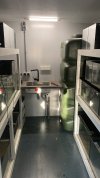
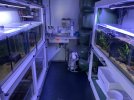
I have a dedicated breeding room where i breed different kind of (dwarf) SA cichlids. Some of the Apistogramma i have bred are.What you have is a community tank. Everyone who has been here for any length of time knows my mantra: a community tank is not a breeding tank. I suggest you do some reading about what is needed for breeding apistos. Most apisto breeders here will tell you that you will need at least 2 tanks, and probably more, for breeding apistos successfully in numbers other than just a few.
The befrendid breeder i was talking about, Said to me he had the most succes with this kind of setup.The complaint about your aquarium is that cardinals will prey on frys so if your intention is to breed the cardinals are not the best dither.
Also when you started this thread you failed to mention the specific species in question - i presume it is D51 from the original comment in another thread but you should indicate otherwise if that is not correct.
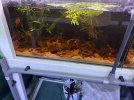
Your aquarium is fairly large with a space of 40x20 (inch); not sure why @MacZ thought it was small.The befrendid breeder i was talking about, Said to me he had the most succes with this kind of setup.
I have some other species in seperate breeding tanks.
What would be your ideal setup? Tank size, dither etc.
Because I think it's too small for two male territories.not sure why @MacZ thought it was small.
Well as a blanket statement I have to disagree as i believe it depends heavily on the species and I will purpose that at an aquarium of this size with proper layout you can find at least one species in which two males can exist though the females will be unlikely to split between them.Because I think it's too small for two male territories.
Aah oké, no I have had 2 pairs of D51 in one tank. I will be separating them tonight. What is in your opinion the most ideal setup (tank size, dither etc)I thought that you planned to breed 2 different species together in 1 tank. That was why I called it a community tank. Your breeder friend's experience is different form most other apisto breeder's. Could this be why you have had "no luck yet"?
I have seperated a pair in this tank first without dithers. In the comming weeks i wil look for any agression. If so I will add some nannostomus. Thanks for the help and i will post here if I have some fry!The ideal set-up is the largest tank available (within reason). For D51 probably over 90 x 30 cm since you will want to start with a pair and see if the are breeding compatible. If not, try another male with the female. Iniridae-group species, like D51, can be picky about partners. In apistos the female decides with whom she will breed. In the wild breeding sites are typically among deep layers of leaf litter but you can use other cave-like structures. Just do not make the opening larger than that in which the female can enter. Water values are important with D51, which is a blackwater species. Acid and soft water is important. Dither fish are not absolutely necessary in a breeding tank, although they can keep the apisto females more protective of their eggs/fry. Schooling tetras - especially blackwater species like Cardinal and Rummy-nose tetras - are oportunistic feeders in the wild, where conditions are not especially conducive to producing adequate microfauna. As such they are experienced fry predators. As a school, they can overwhelm a brooding apisto female. The best dither fish usually available are smaller, surface-dwelling pencil fish. Pencilfish are not true schooling fish but form loose groups where males often "spar" for territory. Their small mouths and surface-dwelling tendency means they are less likely to predate on apisto fry. So, good water values, conditions, and maintenence, good feeding, and a propery scaped tank with a compatible breeding pair should lead to success. I also highly recommend floating plants, which lend a sense of security for the apistos.