• Hello guest! Are you an Apistogramma enthusiast? If so we invite you to join our community and see what it has to offer. Our site is specifically designed for you and it's a great place for Apisto enthusiasts to meet online. Once you join you'll be able to post messages, upload pictures of your fish and tanks and have a great time with other Apisto enthusiasts. Sign up today!

Macmasteri ID

Eddiekay1010

Member
Messages
76
Location
United States
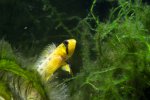
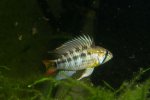
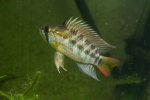
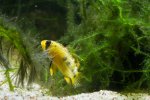
Hi. I'm sorry for asking a very common question, I've looked at all the photos in my books and read the descriptions and I'm not confident 100% with my ID. They are wild and came directly from a Colombian exporter and were listed as viejita but I knew that meant nothing and that they would be almost certainly be macmasteri. From Romer's description in his book, I focused on the female, and my fish doesn't fit his description of a viejita. To help me learn, would someone be able to point out the main reasons from the pics that point to macmasteri. Sorry for the question again, I know its the most tired question on this forum.
 

Attachments

  • IMG_0634.jpg
    IMG_0634.jpg
    852.4 KB · Views: 157
  • IMG_0637.jpg
    IMG_0637.jpg
    793 KB · Views: 146
  • IMG_0651.jpg
    IMG_0651.jpg
    564.3 KB · Views: 143
  • IMG_0661.jpg
    IMG_0661.jpg
    721.3 KB · Views: 138

Frank Hättich

Well-Known Member
5 Year Member
Messages
832
First of all, all the pictures of A. viejita in Römer's CA1 actually show A. macmasteri. Distinguishing females of both species can be very difficult if not impossible. So better focus on males. Your male shows a narrow oval caudal spot, lacks a red seam at the upper edge of the dorsal fin, has narrow abdominal streaks, a lateral band that is separated into segments and shows red markings on the head and anterior part of the upper body. Therefore it's for sure not A. viejita. Moreover I'm quite sure that it's in fact A. macmasteri (rather than some other macmasteri-subcomplex species).
 

Eddiekay1010

Member
Messages
76
Location
United States
First of all, all the pictures of A. viejita in Römer's CA1 actually show A. macmasteri. Distinguishing females of both species can be very difficult if not impossible. So better focus on males. Your male shows a narrow oval caudal spot, lacks a red seam at the upper edge of the dorsal fin, has narrow abdominal streaks, a lateral band that is separated into segments and shows red markings on the head and anterior part of the upper body. Therefore it's for sure not A. viejita. Moreover I'm quite sure that it's in fact A. macmasteri (rather than some other macmasteri-subcomplex species).
Thank you so much. Wow, here I'm studying the photos so closely in the book and feeling really discouraged because I really don't see the differences. Could recommend any books, English or German that have good examples of viejita, I think I have
most of them at home I can reference. Thanks again Frank!
 

Frank Hättich

Well-Known Member
5 Year Member
Messages
832
Could recommend any books, English or German that have good examples of viejita, I think I have most of them at home I can reference. Thanks again Frank!
The book of Staeck & Linke "Amerikanische Cichliden I. Kleine Buntbarsche" show (true) A. viejita under the name "A. viejita type 1". The book by Koslowski "Die Buntbarsche Amerikas Band 2: Zwergcichliden – Apistogramma & Co" and the DATZ book "Sonderheft 2005 – Südamerikanische Zwergcichliden" also show A. viejita. Of course on Tom's site you find pictures too: https://www.tomc.no/fish.aspx?fishIndexID=2327&gruppeID=1
 

Eddiekay1010

Member
Messages
76
Location
United States
The book of Staeck & Linke "Amerikanische Cichliden I. Kleine Buntbarsche" show (true) A. viejita under the name "A. viejita type 1". The book by Koslowski "Die Buntbarsche Amerikas Band 2: Zwergcichliden – Apistogramma & Co" and the DATZ book "Sonderheft 2005 – Südamerikanische Zwergcichliden" also show A. viejita. Of course on Tom's site you find pictures too: https://www.tomc.no/fish.aspx?fishIndexID=2327&gruppeID=1
Thank you, I have an of those, I'll be practicing tonight
 

Frank Hättich

Well-Known Member
5 Year Member
Messages
832
In the Linke and Staeck book, are type 2 and 3 not viejita?
Yes, they are not viejita. Type 2 is known as A. sp. Rotflecken and type 3 as A. sp. Schwarzkehl. Whether the latter two are two different species or merely different forms of the same species isn't known for sure, but I believe they are different species.
 

Members online

No members online now.

Forum statistics

Threads
18,703
Messages
124,172
Members
13,589
Latest member
rozyjuise

Latest profile posts

Platforma SaldeoSMART automatyzuje obieg dokumentów i odczyt faktur (OCR) w firmach oraz biurach rachunkowych. System jest gotowy na zmiany prawne, a integracja z ksef pozwala na bezpieczne wysyłanie i odbieranie e-faktur ustrukturyzowanych.
dimandobson wrote on Ben Bergman's profile.
Hi Bergman. I have a pair of breeding dwarf cichlid for sale. if you are still looking, drop me your whatsapp number and i will send some videos to your whatsapp
Good-backlink.com - Professional website promotion, get more traffic to your website and improve ranking by using high PR link building service.
martin_c wrote on illumnae's profile.
Hi,

just in case you happen to live in Germany (or Netherlands): I have a wildcaught female A. psammophila, you could have it for free. I have no use for it anymore.

BR
Martin
Top