• Hello guest! Are you an Apistogramma enthusiast? If so we invite you to join our community and see what it has to offer. Our site is specifically designed for you and it's a great place for Apisto enthusiasts to meet online. Once you join you'll be able to post messages, upload pictures of your fish and tanks and have a great time with other Apisto enthusiasts. Sign up today!

Any reason to not send fish waste water through a distiller ?

anewbie

Well-Known Member
5 Year Member
Messages
2,702
I agree with Mike, that's not feasible. And even heavy duty RO-Systems used in the Middle East and Australia (i.e. in desert countries) get better ratios than 1:1.
But if i recycle the waste water back into the ro system constrained by the tds level of the waste water what might be achievable? If we presume the base water is 30 tds and then i presume the waste water would be 60tds for 1:1 system so i could recycle that and use it so that would be what 12% total waste water and not water greater than 120tds would be sent through the membrane ?
 

MacZ

Well-Known Member
5 Year Member
Messages
4,323
Location
Germany
I'm not an engineer and I am pretty sure I would try to account for the quality and specifications of the membranes and the pressure the system can withstand.

So I can only deduct from what systems are out there and if these things that are as big as my whole appartment with strong steel plumbing etc I doubt one can achieve this DIY.
 

anewbie

Well-Known Member
5 Year Member
Messages
2,702
I'm not an engineer and I am pretty sure I would try to account for the quality and specifications of the membranes and the pressure the system can withstand.

So I can only deduct from what systems are out there and if these things that are as big as my whole appartment with strong steel plumbing etc I doubt one can achieve this DIY.
The key difference is that i can control the input tds - so i am asking what is wrong with my assumptions from the description i have provided. The above solution does not use unusually high pressure or anything fancy other than to recycle the discarded water from the ro system under the presumption that the first round 30tds goes to 60tds and then the 2nd round 60tds goes to 120tds - naturally the decision is made based on the tds value of the discarded water. When mike mentioned 'waste' water or whatever the typical water starts with a much higher amount of dissolved solid so by the time you attempt to recycle it you are putting stress on the membrane which will wear it out. I.e, if your tap water is 200tds then the recycle is 400tds (if my assumptions are correct) which is quite hard and would need a bit of pressure to force through the membrane.
 

Jonathan A

Member
5 Year Member
Messages
66
The above solution does not use unusually high pressure or anything fancy other than to recycle the discarded water from the ro system
Do you mean pushing the immediate waste-water from the RO back through the RO? This sounds like in-lining RO membranes in series, which is what many people (including myself) do to improve the waste-water ratio. Bulk-Reed-Supply calls this the "water saver" configuration if you want to get a visual. I could have just misinterpreted your statement tho so feel free to ignore this if that's the case.

The one concern i have is that c2 will be loaded with bacteria - stink to high heaven and perhaps cause long term issue - not sure if there is a solution to that - maybe drip in some tap water with chlorine ? The top of c2 will have a hose to the drain in case c2 over flows. Is there a 'safe' chemical to use to kill bacteria or is the bacteria a big problem ?
This would heavily depend on how often you're sending the waste water back through the RO and if you have circulation in the storage container. Water-change-water isn't really that dirty, it's not like your aquariums aren't already full of different microorganisms and whatnot. If the water sat with no circulation for several days or weeks maybe it would become a noticeable issue, but I had plenty of fish survive in the sump of my old system (the equivalent of you C2).
 

anewbie

Well-Known Member
5 Year Member
Messages
2,702
Do you mean pushing the immediate waste-water from the RO back through the RO? This sounds like in-lining RO membranes in series, which is what many people (including myself) do to improve the waste-water ratio. Bulk-Reed-Supply calls this the "water saver" configuration if you want to get a visual. I could have just misinterpreted your statement tho so feel free to ignore this if that's the case.
Yes but with one twist; a tds controller would send the water down the drain if it reaches a certain programmable tds.
This would heavily depend on how often you're sending the waste water back through the RO and if you have circulation in the storage container. Water-change-water isn't really that dirty, it's not like your aquariums aren't already full of different microorganisms and whatnot. If the water sat with no circulation for several days or weeks maybe it would become a noticeable issue, but I had plenty of fish survive in the sump of my old system (the equivalent of you C2).
Yes - well it would contain particles from leaves and algae and stuff - but my thought i want to do something like
drain -> sentiment filter (these are cheap) -> carbon (remove organics) -> c2 (c2 also gets the reject from the ro system and when needed dechlorinated tap water) -> ro unit.
--
Not sure if the carbon layer to remove organics is beneficial - i could run it through uv filter to remove bacterial but of course that would create more yearly maint and cost to replace the uv bulb.

Thoughts on if carbon and/or uv are beneficial ?
 

Jonathan A

Member
5 Year Member
Messages
66
The initial sediment filter would probably be sufficient to prevent the RO pre-membrane stages from getting clogged. RO systems typically have a carbon filter in them already so I wouldn't see the need for another one -- not that it would be bad, just not necessary.

As for UV, definitely not needed. I think you're much much more concerned about organics than you need to be. You're not going to have some rotting pool of water sitting there unless you're breeding something messy as hell like carp XD.

The RO membrane, pre-filter stages, and DI (if you choose to add DI) are going to be more than enough to prevent anything from getting through to the clean water.
 

anewbie

Well-Known Member
5 Year Member
Messages
2,702
The initial sediment filter would probably be sufficient to prevent the RO pre-membrane stages from getting clogged. RO systems typically have a carbon filter in them already so I wouldn't see the need for another one -- not that it would be bad, just not necessary.

As for UV, definitely not needed. I think you're much much more concerned about organics than you need to be. You're not going to have some rotting pool of water sitting there unless you're breeding something messy as hell like carp XD.

The RO membrane, pre-filter stages, and DI (if you choose to add DI) are going to be more than enough to prevent anything from getting through to the clean water.
Ok. So the pre sediment filter are good - i won't run carbon in the ro unit it is cheaper to just buy these large carbon filters that'll last 10 or so years as they contain more of a bulk amount.

Do you agree with my basic math that i should get around 80% recovery via recyling the waste while it is below 180 tds ?
 

anewbie

Well-Known Member
5 Year Member
Messages
2,702
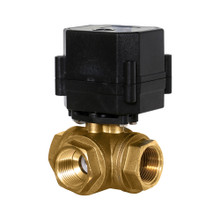
So this is pretty neat - they make this lovely device:

Which can be combined with this lovely device (I think):

And tada - so people what is wrong with my logic. Why is this a bad idea or not a product ?
 

Ben Rhau

Apisto Club
5 Year Member
Messages
699
Location
San Francisco
You could poke around the reef community for people's experience running RO membranes in parallel. If you google it, there are a lot of discussions. I think it could work, especially considering that your input water has low TDS to begin with. Some things to consider:
  • The pressure will be a lot lower after the first membrane, so you might need a pump.
  • The output after the second membrane might be higher TDS than you want (need to determine empirically).
  • You will exhaust the second membrane a lot faster.
But theoretically, you should be able to save some water.
 

anewbie

Well-Known Member
5 Year Member
Messages
2,702
You could poke around the reef community for people's experience running RO membranes in parallel. If you google it, there are a lot of discussions. I think it could work, especially considering that your input water has low TDS to begin with. Some things to consider:
  • The pressure will be a lot lower after the first membrane, so you might need a pump.
  • The output after the second membrane might be higher TDS than you want (need to determine empirically).
  • You will exhaust the second membrane a lot faster.
But theoretically, you should be able to save some water.
With the current design i sketch i plan on just throwing low tds waste water back into the input reservoir (c2) so there is no reason to much with running a '2nd' membrane per sey. I don't quite understand the benefit of an additional 'membrane' to just rerunning the soft (but harder) water through the system as long as the tds is low. The entire design is predicated on the idea that we can make a logical decision based off of the tds of the rejected (waste) water. I believe perhaps incorrectly that the problem people run into with sending waste water through the ro unit is that it has insanely high tds - if you start with tds 300 well water for example the 2nd waste water would be over 600 which is of course much higher by a factor of 10 then my '2nd' pass.
--
I could be totally missing something rather serious in my conjectures but i just don't see what the advantages of trying to run the waste water in parallel unless you are trying to incrrease the gpd.
 

Jonathan A

Member
5 Year Member
Messages
66
With what I understand of your current plan, there shouldn't be any system design issues mechanically I think... Whether it saves money on water only vs media replacement, no idea.
 

anewbie

Well-Known Member
5 Year Member
Messages
2,702
With what I understand of your current plan, there shouldn't be any system design issues mechanically I think... Whether it saves money on water only vs media replacement, no idea.
While saving money would be great it is also an attempt to not be wasteful of water given the amount i intend to use. I just don't want a big maintenance headache for the system. replacing sentiment filters is a 2 minute exercise but some of the other stuff can be more annoying.
 

Members online

Forum statistics

Threads
18,704
Messages
124,175
Members
13,590
Latest member
jukaklimatyzacje

Latest profile posts

Platforma SaldeoSMART automatyzuje obieg dokumentów i odczyt faktur (OCR) w firmach oraz biurach rachunkowych. System jest gotowy na zmiany prawne, a integracja z ksef pozwala na bezpieczne wysyłanie i odbieranie e-faktur ustrukturyzowanych.
dimandobson wrote on Ben Bergman's profile.
Hi Bergman. I have a pair of breeding dwarf cichlid for sale. if you are still looking, drop me your whatsapp number and i will send some videos to your whatsapp
Good-backlink.com - Professional website promotion, get more traffic to your website and improve ranking by using high PR link building service.
martin_c wrote on illumnae's profile.
Hi,

just in case you happen to live in Germany (or Netherlands): I have a wildcaught female A. psammophila, you could have it for free. I have no use for it anymore.

BR
Martin
Top