• Hello guest! Are you an Apistogramma enthusiast? If so we invite you to join our community and see what it has to offer. Our site is specifically designed for you and it's a great place for Apisto enthusiasts to meet online. Once you join you'll be able to post messages, upload pictures of your fish and tanks and have a great time with other Apisto enthusiasts. Sign up today!

Befuddled by ph

anewbie

Well-Known Member
5 Year Member
Messages
2,702
This is more of a commentary but after I put my foot in my mouth and assumed the ph was super low only to have it measured out at 6.4 i went and spot checked 5 aquariums and all of those measured below 6 (more precisely hte api test kit was bright yellow which is the lowest it measured @ 6.0).

So it begs the question why is this one aquarium running higher - this is of course important to myself since i put in a pair of these which will want sub 6 preferably sub 5 long term for success:

I will of course add more leaves and maybe some peat behind the matten filter though i've not treated this aquarium then any of the others that show much lower ph.
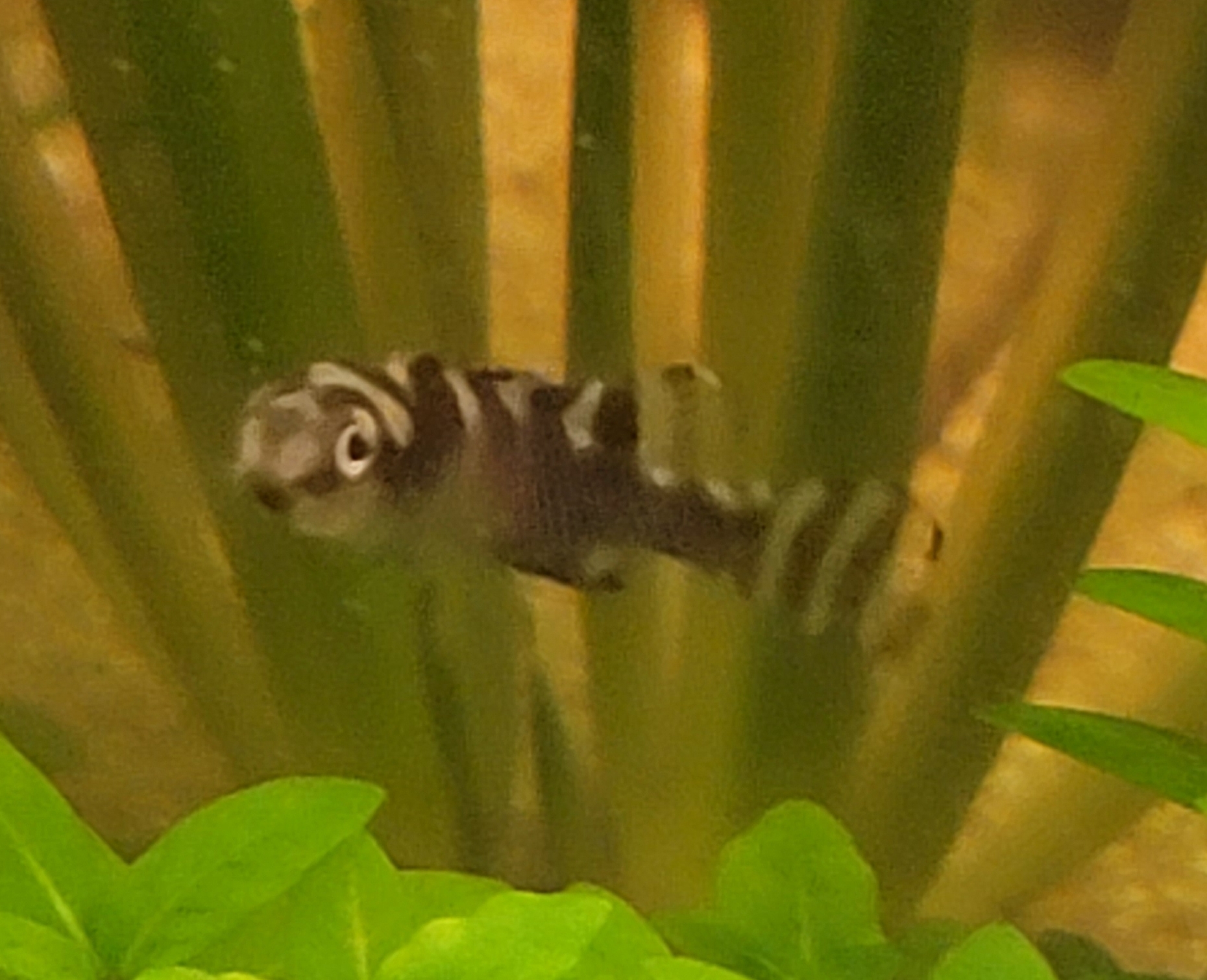
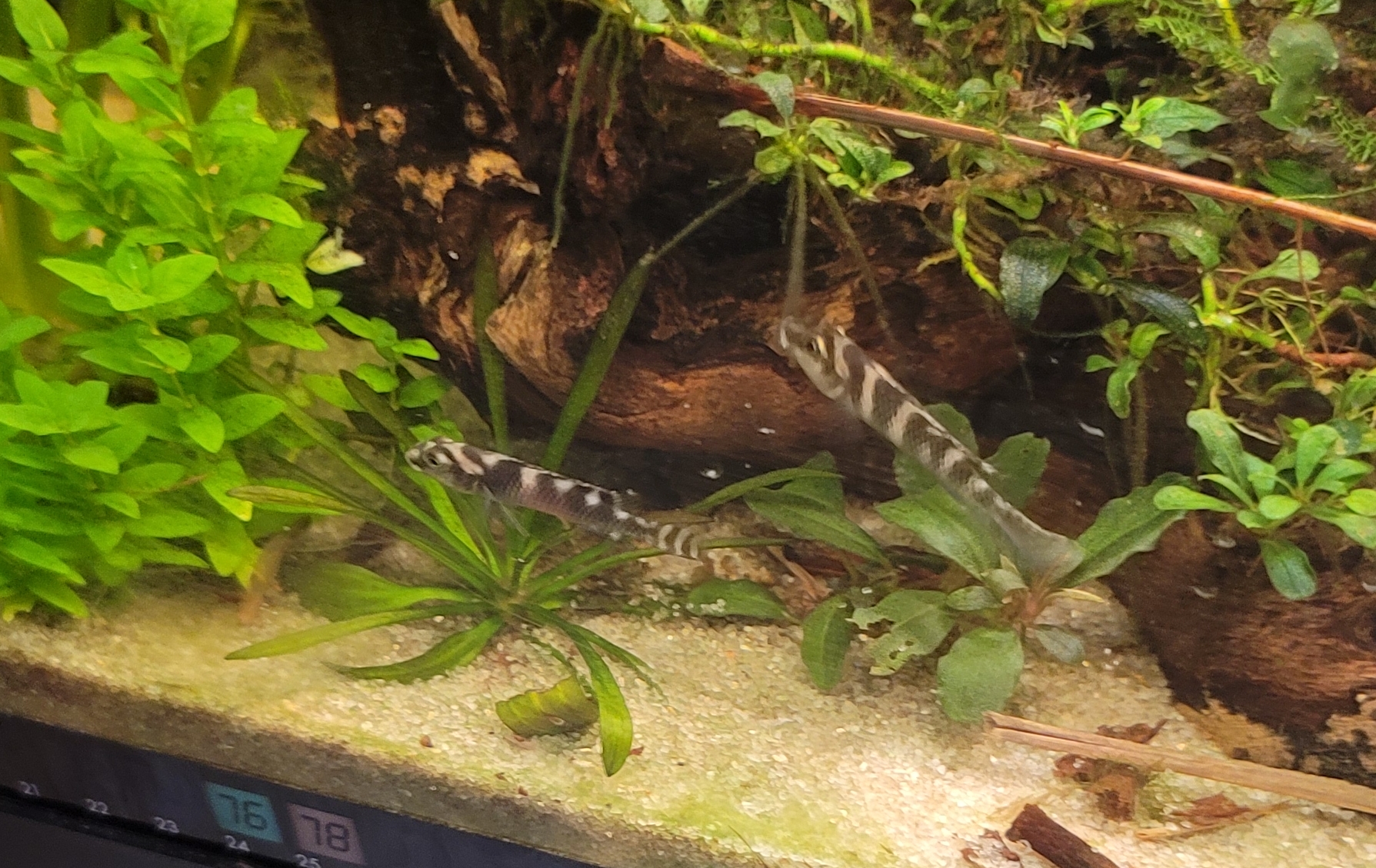
a5.jpg
a1.jpg
 

anewbie

Well-Known Member
5 Year Member
Messages
2,702
As Darrel has written many times pH measurements are not all that reliable in soft water. This is especially true when using most chemical and pen pH testers that aquarists use.
So should i assume it is lower or higher or just ignore the reading all together?
 

dw1305

Well-Known Member
5 Year Member
Messages
2,979
Location
Wiltshire UK
Hi all,
So should i assume it is lower or higher or just ignore the reading all together?
As Mike says pH isn't a very useful parameter in low conductivity water. The problems are that very small changes in water chemistry cause large changes in pH, and that pH meters are a specific type of conductivity meter, and they take a long time to stabilise in low conductivity solutions (like our tanks).

You can get around this by using a conductivity meter, they don't tell you anything about pH, but if you have a solution that is ~50 microS ("30 ppm TDS") then any small addition of acid (like humic or fulvic acid) will lower pH.

If you want all the chemistry then this website is excellent <"https://niade.com/about-us/">.

Cheers Darrel
 

anewbie

Well-Known Member
5 Year Member
Messages
2,702
Hi all,

As Mike says pH isn't a very useful parameter in low conductivity water. The problems are that very small changes in water chemistry cause large changes in pH, and that pH meters are a specific type of conductivity meter, and they take a long time to stabilise in low conductivity solutions (like our tanks).

You can get around this by using a conductivity meter, they don't tell you anything about pH, but if you have a solution that is ~50 microS ("30 ppm TDS") then any small addition of acid (like humic or fulvic acid) will lower pH.

If you want all the chemistry then this website is excellent <"https://niade.com/about-us/">.

Cheers Darrel
The aquarium in question has a stable tds of 30-35; so quite soft. I was just a bit surprise it had higher ph then all the sister tanks around it (approx 15). It is this one; for some weird reason the discus tank consistently read ph around 4.7 (ec 20) and the 'balckwater tank' in the blackwater thread i created consistently read ph 5.5. To be honest i'm mostly concern about those fishes pictured above since they are said to be a bit picky.


zc.jpg
z2.jpg
z9.jpg
z3.jpg
zd.jpg
 

Ben Rhau

Apisto Club
5 Year Member
Messages
699
Location
San Francisco
You can measure pH in soft water, it's just a pain. My thoughts:
  • Gold standard is using an electrode style meter and adding salt to the water. IME the reading takes a long time to stabilize, and other things (like the container) can confound your measurement. It's also a huge PITA to keep the electrode wet and maintain calibration, since my house is not a lab. For this reason, I just don't bother measuring it anymore. When I was keeping low pH tanks, I just lived with the idea that the pH was relative to how I was measuring it and not a measurement repeatable by someone else.
  • In my hands, the measurement is still noisy, so if you took 3 measurements of the same tank at different times, I wouldnt doubt that it varied by 0.4. That might not be true of your meter, but it was in my case.
  • Your tanks are very large and not uniform, so you certainly have substances from plants, wood, etc that are moving your pH differently in each.
  • It is VERY HARD to keep the pH much lower than 5.5. When I kept paros the only way I could do this was by adding acid at each water change. Even when I add acid, the pH starts to drift up within the day. I had to do this a number times before learning how much acid to add so that the pH was still low by the next water change (but not too low right after adding it). I know you've tried this before and concluded that it took a lot of acid.
Is there a reason you want to pH lower than 6? For sex ratios, breeding, etc.?
 

anewbie

Well-Known Member
5 Year Member
Messages
2,702
You can measure pH in soft water, it's just a pain. My thoughts:
  • Gold standard is using an electrode style meter and adding salt to the water. IME the reading takes a long time to stabilize, and other things (like the container) can confound your measurement. It's also a huge PITA to keep the electrode wet and maintain calibration, since my house is not a lab. For this reason, I just don't bother measuring it anymore. When I was keeping low pH tanks, I just lived with the idea that the pH was relative to how I was measuring it and not a measurement repeatable by someone else.
  • In my hands, the measurement is still noisy, so if you took 3 measurements of the same tank at different times, I wouldnt doubt that it varied by 0.4. That might not be true of your meter, but it was in my case.
  • Your tanks are very large and not uniform, so you certainly have substances from plants, wood, etc that are moving your pH differently in each.
  • It is VERY HARD to keep the pH much lower than 5.5. When I kept paros the only way I could do this was by adding acid at each water change. Even when I add acid, the pH starts to drift up within the day. I had to do this a number times before learning how much acid to add so that the pH was still low by the next water change (but not too low right after adding it). I know you've tried this before and concluded that it took a lot of acid.
Is there a reason you want to pH lower than 6? For sex ratios, breeding, etc.?
The literature suggest the pictured fish in the first post require ph below 5.5 and below 5 is better for successful breeding. While my hand held meter is quirky as you said and i expect it to be quirky the liquid i believe are reliable though as mike/darrel said it only takes a small amount of humic acid to impact the ph with very soft water. As i noted it is a relative thing that most of my tanks have stablized consistently at a low ph (i consider 5.6 and lower as low) i was surprise this one guy is way up at 6.4 Now i did not measure the ph in every tank just 5 or 6 - i don't really have a farm like some people iwth lots of 5s and 10s - i mostly believe in larger aquarium and so things are a bit more half hazard in my layout and handling of things. The weirdest thing is the two aquariums i put fertilizer in have among the lowest ec and ph.
 

dw1305

Well-Known Member
5 Year Member
Messages
2,979
Location
Wiltshire UK
Hi all,
The aquarium in question has a stable tds of 30-35; so quite soft. ....... To be honest i'm mostly concern about those fishes pictured above since they are said to be a bit picky.
That should be fine. If you add some more tannins (I use Alder (Alnus) "cones" and Oak (Quercus spp.) leaves) the pH should come down.

In planted tanks the removal of nitrate (NO3-) causes the pH to rise (again the chemistry is on the Niade website - <"https://niade.com/planted-aquarium-ph-drift-kh-nitrate/">.

Cheers Darrel
 

anewbie

Well-Known Member
5 Year Member
Messages
2,702
Hi all,

That should be fine. If you add some more tannins (I use Alder (Alnus) "cones" and Oak (Quercus spp.) leaves) the pH should come down.

In planted tanks the removal of nitrate (NO3-) causes the pH to rise (again the chemistry is on the Niade website - <"https://niade.com/planted-aquarium-ph-drift-kh-nitrate/">.

Cheers Darrel
One correct i said tds 30-35 the actual hardness is EC 30-35 so tds of 15 or 16.
 

anewbie

Well-Known Member
5 Year Member
Messages
2,702
Hi all,

That should be fine. If you add some more tannins (I use Alder (Alnus) "cones" and Oak (Quercus spp.) leaves) the pH should come down.

In planted tanks the removal of nitrate (NO3-) causes the pH to rise (again the chemistry is on the Niade website - <"https://niade.com/planted-aquarium-ph-drift-kh-nitrate/">.

Cheers Darrel
So i skimmed the link you posted and it is enough to make you dizzy with the change in nitrate impacting ph. It begs the question if my tank is over populated (nitrate production) and the plants are eating most if not all the nitrate - still is nitrate ph like co2 ph - not really a major change to water chemistry. I should probably test the ph both in the morning and evening to see how much it drift from this nitrate cycle. Hum. This one is pretty much middle of the road with plant density but this really begs the question on what my plants are doing to my sanity.
 

Ben Rhau

Apisto Club
5 Year Member
Messages
699
Location
San Francisco
While my hand held meter is quirky as you said and i expect it to be quirky the liquid i believe are reliable
API is repeatable, but I believe the range only goes down to 6.0?


The literature suggest the pictured fish in the first post require ph below 5.5 and below 5 is better for successful breeding.
Yeah, same was true for certain Parosphromenus species. Idea being that the fish are only used to seeing potential pathogens that are selected at low pH. The ones that can survive at higher pH are new to the immune system.

Some speces have only been recorded to breed in captivity below pH 4.5. I don't know if this is a real requirement or if it's just dumb luck that a keeper found the right combination of conditions. For sure the sample size is not high. But I understand wanting to replicate conditions that have worked before.

s mike/darrel said it only takes a small amount of humic acid to impact the ph with very soft water.
I disagree that this effect can get the pH as low as you want. The water is always open to the air, which means you have dissolved CO2 generating carbonate. You can do the test of leaving distilled water open, adding strong acid dropwise and seeing how long the pH stays bellow 5.5. It always wants to drift up.

I think tannins (and the associated organic matter) are great for tanks. But I'm highly skeptical that they will move your pH much below 5.5 in the long term, especially in tanks as large as yours. I have seen the pH lower in small tanks with very large pieces of wood, but this effect didn't last longer than a month or two. I think you can only do it with acid.
 

anewbie

Well-Known Member
5 Year Member
Messages
2,702
API is repeatable, but I believe the range only goes down to 6.0?


Yeah, same was true for certain Parosphromenus species. Idea being that the fish are only used to seeing potential pathogens that are selected at low pH. The ones that can survive at higher pH are new to the immune system.

Some speces have only been recorded to breed in captivity below pH 4.5. I don't know if this is a real requirement or if it's just dumb luck that a keeper found the right combination of conditions. For sure the sample size is not high. But I understand wanting to replicate conditions that have worked before.


I disagree that this effect can get the pH as low as you want. The water is always open to the air, which means you have dissolved CO2 generating carbonate. You can do the test of leaving distilled water open, adding strong acid dropwise and seeing how long the pH stays bellow 5.5. It always wants to drift up.

I think tannins (and the associated organic matter) are great for tanks. But I'm highly skeptical that they will move your pH much below 5.5 in the long term, especially in tanks as large as yours. I have seen the pH lower in small tanks with very large pieces of wood, but this effect didn't last longer than a month or two. I think you can only do it with acid.
Well the discus tank is 180 gallon and for some strange reason i don't fully understand it consistency around 4.7 as cross checked by two meters. Yea the meters are not accurate but given the large margin of error i give them i still suspect it is below 5. This is 180 gallons. Correct api only goes to 6 but if it is not bright yellow then i know it is higher than 6.

Maybe i don't really need below 5 but i would still like it to be below 6. I'll muck with a little and cross check some things - i do have acid but i *hate* using it also ti seems a very artificial way to get somewhere that should occur naturally.

I'll also check a couple of more thanks when i go down stair to feed the fishes (i checked hte ones on the main floor earlier today when i did water changes.
 

Ben Rhau

Apisto Club
5 Year Member
Messages
699
Location
San Francisco
Well the discus tank is 180 gallon and for some strange reason i don't fully understand it consistency around 4.7 as cross checked by two meters. Yea the meters are not accurate but given the large margin of error i give them i still suspect it is below 5. This is 180 gallons. Correct api only goes to 6 but if it is not bright yellow then i know it is higher than 6.
My money is on measurement error, but these systems are complex, so of course there's stuff I'm not taking into account.

i do have acid but i *hate* using it also ti seems a very artificial way to get somewhere that should occur naturally.
I get it, but the whole setup is artificial compared to what happens in the natural habitat. Peat would be natural, but problematic for sustainability reasons. At the end of the day, protons are protons. And the other ions (in sulfuric or phosphoric acid) are ferts. I wouldn't suggest it for a beginner, but it's how a lot of people do it.
 

dw1305

Well-Known Member
5 Year Member
Messages
2,979
Location
Wiltshire UK
Hi all,
So i skimmed the link you posted and it is enough to make you dizzy with the change in nitrate impacting ph
You also have CO2 depletion, which will raise pH.
It begs the question if my tank is over populated (nitrate production) and the plants are eating most if not all the nitrate - still is nitrate ph like co2 ph - not really a major change to water chemistry.
I really wouldn't worry, the way I look at is that actively growing plants are the single most important factor in maintaining water quality.
I should probably test the ph both in the morning and evening to see how much it drift from this nitrate cycle.
I'd guess that CO2 depletion will have a much bigger effect on pH. I used to occasionally try and measure pH and dissolved oxygen on the tanks that were in the lab., but usually they would be over 100% DO & ~pH 8 in the afternoon. I wasn't at work before the lights came on, but shell attrition of the snails showed that pH had been below pH7.
Hum. This one is pretty much middle of the road with plant density but this really begs the question on what my plants are doing to my sanity.
Plants are an unmitigated good thing.

Cheers Darrel
 

martin_c

Member
5 Year Member
Messages
52
Location
Aachen, Germany
I once had issues getting the PH down in a tank, and in the end it seemed to be because of the sand i used. Even though it was river sand (from Maas river in netherlands) which was adverted as PH neutral and didn't show no visible reaction when i dripped acid on it, the issue disappeared after i had switched to a different sand.
 

MacZ

Well-Known Member
5 Year Member
Messages
4,323
Location
Germany
I once had issues getting the PH down in a tank, and in the end it seemed to be because of the sand i used. Even though it was river sand (from Maas river in netherlands) which was adverted as PH neutral and didn't show no visible reaction when i dripped acid on it, the issue disappeared after i had switched to a different sand.
The Maas, just like the Rhine (I lived my whole live between them) is a river with very hard water and a lot of the sediment both rivers move each year is the result of human additition of rocks and gravel from different places to the banks as part of river maintenance. Even though the Rhine is one of the biggest an mightiest rivers in Europe it is far from being left in its natural state due to the millions and millions living on its banks and along its tributaries. I use smaller rocks and pebbles from the river banks, fully aware most of it was added by humans some 20 years ago where I go to collect them. It usually is inert quarz.
 

MacZ

Well-Known Member
5 Year Member
Messages
4,323
Location
Germany
As for the problem itself: I'm with Darrell and the others on this one. Why measure pH when you know it is a pain? Even with my autistic traits I have given up on this.

As I'm in a phase of having no single fish in my home right now and having kept softwater only for years. I'm treading water trying to maintain a small planted tank with snails and other microfauna. Now I'm having trouble keeping snails alive because the plants are doing so well there is almost no more aufwuchs and the snails are starting to starve and their shells are becoming white from lack of minerals. So I'm kind of in an opposite situation at the moment.
 

anewbie

Well-Known Member
5 Year Member
Messages
2,702
Well it is a bit of a curiosity though given the small amount of ions make a big difference in ph that might be part of the issue.

Btw one thing that occurred to me is that the discus tank has lower ph because of the higher temperature. While i'm not sure 6 degrees make a big difference in co2 concentration there might be a relationship here of some sort.

As for sand - i've uniformed myself across 4 different varities and since i have low ph aquariums with at least 3 of them that is not the issue with this specific aquarium; the 4th one i thought might be a problem but i did some control tests and determined it was not leaching (at least the ec pen could not detect a leach).
 

dw1305

Well-Known Member
5 Year Member
Messages
2,979
Location
Wiltshire UK
Hi all,
Well it is a bit of a curiosity though given the small amount of ions make a big difference in ph that might be part of the issue.
That is the one, small additions of proton donors (or proton acceptors) make a huge difference to pH in low conductivity water.
Btw one thing that occurred to me is that the discus tank has lower ph because of the higher temperature. While i'm not sure 6 degrees make a big difference in co2 concentration there might be a relationship here of some sort.
There is, but it is that all gases are less soluble at higher temperatures.
As for sand - i've uniformed myself across 4 different varities and since i have low ph aquariums with at least 3 of them that is not the issue with this specific aquarium; the 4th one i thought might be a problem but i did some control tests and determined it was not leaching (at least the ec pen could not detect a leach).
Electrical conductivity is a sensitive measurement it will detect absolutely tiny additions of salts.

Cheers Darrel
 

Members online

Forum statistics

Threads
18,703
Messages
124,172
Members
13,589
Latest member
rozyjuise

Latest profile posts

Platforma SaldeoSMART automatyzuje obieg dokumentów i odczyt faktur (OCR) w firmach oraz biurach rachunkowych. System jest gotowy na zmiany prawne, a integracja z ksef pozwala na bezpieczne wysyłanie i odbieranie e-faktur ustrukturyzowanych.
dimandobson wrote on Ben Bergman's profile.
Hi Bergman. I have a pair of breeding dwarf cichlid for sale. if you are still looking, drop me your whatsapp number and i will send some videos to your whatsapp
Good-backlink.com - Professional website promotion, get more traffic to your website and improve ranking by using high PR link building service.
martin_c wrote on illumnae's profile.
Hi,

just in case you happen to live in Germany (or Netherlands): I have a wildcaught female A. psammophila, you could have it for free. I have no use for it anymore.

BR
Martin
Top