• Hello guest! Are you an Apistogramma enthusiast? If so we invite you to join our community and see what it has to offer. Our site is specifically designed for you and it's a great place for Apisto enthusiasts to meet online. Once you join you'll be able to post messages, upload pictures of your fish and tanks and have a great time with other Apisto enthusiasts. Sign up today!

Apisto Baenschi?

killis75

New Member
5 Year Member
Messages
23
Location
Sweden
Hi all!
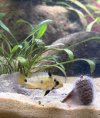
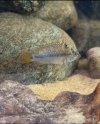
I’m wondering if this is Baenschi?
I missing the vertical lines that I thought war a trademark for them.

In the long run it doesn’t really matter I still adore them both, but it would be nice to know what kind of apisto they are!

Pretty sure it’s a male and a female though!

Appreciate help!
 

Attachments

  • IMG_3307.jpeg
    IMG_3307.jpeg
    358.9 KB · Views: 119
  • IMG_3306.jpeg
    IMG_3306.jpeg
    316.1 KB · Views: 122

killis75

New Member
5 Year Member
Messages
23
Location
Sweden
Given the deformed scales on the male's caudal peduncle, they might be hybrids.
If they are hybrids what do that mean (accept from crossbreeding) if they don’t pair or if one of them dies I’m will not able to find a new mate?

How certain is it that they are hybrids would you say, is there a chance they are too young to tell yet?
 

Phil_1983

Member
Messages
87
Location
Germany, NRW
If they are hybrids what do that mean (accept from crossbreeding) if they don’t pair or if one of them dies I’m will not able to find a new mate?

How certain is it that they are hybrids would you say, is there a chance they are too young to tell yet?
I certainly do not have Frank’s level of experience, so I will only answer your second question.

In my experience, Ap. baenschi shows the vertical bars at a fairly young age, so I would expect them to have been visible in your photos. Do not get me wrong — I am only guessing their size from the pictures, but they seem larger than the size at which I would expect baenschi to start showing that pattern.
 

MacZ

Well-Known Member
5 Year Member
Messages
4,323
Location
Germany
If they are hybrids what do that mean (accept from crossbreeding) if they don’t pair or if one of them dies I’m will not able to find a new mate?
Correct and you will also not find any buyers for any possible offspring, provided they are viable.
 

Frank Hättich

Well-Known Member
5 Year Member
Messages
832
If they are hybrids what do that mean (accept from crossbreeding) if they don’t pair or if one of them dies I’m will not able to find a new mate?
If they are hybrids I would refrain from breeding them at all.
How certain is it that they are hybrids would you say,
I can't tell you a number. It's just that I personally have no idea which other nijsseni-group species it could be and together with the deformed scales of the male, for me, hybridisation is a likely explanation.
 

killis75

New Member
5 Year Member
Messages
23
Location
Sweden
Well that was not fun to hear…. My plan was never to breed and sell them, but I had hope to see them go through that though.
I asked the store to order them from a specific and well known breeder though I couldn’t find them in any local store.

Thanks for all help I really appreciate it!
 

KenL

Active Member
5 Year Member
Messages
298
Definitely a funny looking pair.
To me, the male looks more like nijsseni than baenschi.
The female doesn’t look like anything in particular.

I would be seeking more info from the well known breeder.
 

killis75

New Member
5 Year Member
Messages
23
Location
Sweden
Definitely a funny looking pair.
To me, the male looks more like nijsseni than baenschi.
The female doesn’t look like anything in particular.

I would be seeking more info from the well known breeder.
I have sent a mail to the distributor and he will contact the breeder and see what he will say!
Let’s see when he replies to me.
 

anewbie

Well-Known Member
5 Year Member
Messages
2,702
Nijjensi was my first guess since i keep them but i didn't want to say anything because he doesn't really look like Nijjensi - something is just wrong with his lines. I've not kept Baenshci and i did check tom's pictures but also if they were young (he looks like an adult) they could be changing. I know there are some cf panduro but i have no clue if they all look identical to panduro or of there is some variation and i believe Nijjensi has different catch locations.

Another oddity (to me); is if you just receive them why are they adult - a breeder particularly a hobbist breeder should be selling young fishes. It takes my f1s forever to grow up - nearly a year to reach sexual maturity and longer to reach 'full' size. Those two look 'old'. It has been years since i've been sold 'old' dwarf cichild. Esp given their limited life span of 3 to 6 years.
 

MacZ

Well-Known Member
5 Year Member
Messages
4,323
Location
Germany
Having gone through the whole A.-nijsseni-group for potential matches:

@Frank Hättich , if, against all odds, they are not hybrids, could they be A. feconat? The pictures on Tom's homepage are quite close in my opinion. If I'm mistaken my work day was probably too exhausting. ;)
 

killis75

New Member
5 Year Member
Messages
23
Location
Sweden
Nijjensi was my first guess since i keep them but i didn't want to say anything because he doesn't really look like Nijjensi - something is just wrong with his lines. I've not kept Baenshci and i did check tom's pictures but also if they were young (he looks like an adult) they could be changing. I know there are some cf panduro but i have no clue if they all look identical to panduro or of there is some variation and i believe Nijjensi has different catch locations.

Another oddity (to me); is if you just receive them why are they adult - a breeder particularly a hobbist breeder should be selling young fishes. It takes my f1s forever to grow up - nearly a year to reach sexual maturity and longer to reach 'full' size. Those two look 'old'. It has been years since i've been sold 'old' dwarf cichild. Esp given their limited life span of 3 to 6 years.
I ordered a male and a female as young as possible but yet too be certain of their sex!
It’s hard do judge but male is about 4-4,5cm (body, not with fins)

This is what I got from distributor:
”I am sorry for your disappointment. The fish were purchased from a breeder who's very knowledgeable and has been breeding Apistogramma for decades. He's got many different species including an undescribed species called Apistogramma sp. "Inca II" which is quite similar to Ap. baenschi.
I have asked him about possible mix up of the two species so we'll see what he replies.”

I have too see what the breeder answer!
Thanks for answer!
 

killis75

New Member
5 Year Member
Messages
23
Location
Sweden
Having gone through the whole A.-nijsseni-group for potential matches:

@Frank Hättich , if, against all odds, they are not hybrids, could they be A. feconat? The pictures on Tom's homepage are quite close in my opinion. If I'm mistaken my work day was probably too exhausting. ;)
I really hope they are not hybrids….
Female is in a cave and have now built a small sandwall by the entrance so she is the only one that fits through

Thank you for trying to find a answer for me, appreciate a lot
 

Frank Hättich

Well-Known Member
5 Year Member
Messages
832
Having gone through the whole A.-nijsseni-group for potential matches:

@Frank Hättich , if, against all odds, they are not hybrids, could they be A. feconat? The pictures on Tom's homepage are quite close in my opinion. If I'm mistaken my work day was probably too exhausting. ;)
If they were A. feconat I would expect a larger caudal spot (male and female) and a larger lateral spot (female). Moreover, on all pictures of feconat I know the males show at least some (often many) dark scales in front of the caudal spot, particularly below the lateral band.
 
Last edited:

Mike Wise

Moderator
Staff member
5 Year Member
Messages
11,869
Location
Denver, Colorado, U.S.A.
I just checked the caudal peduncle of the female: enlarged the area, removed any color and and increased contrast to better examine the area. The female also shows similar scale deformity that is seen on the male. My guess is that it is a hybrid. FYI, the name A. sp. Inca II is another name once used for A. sp. Zwilling aka A. foconat. Whatever it is, it is not A. baenschi.
 

MacZ

Well-Known Member
5 Year Member
Messages
4,323
Location
Germany
If they were A. feconat I would expect a larger caudal spot (male and female) and a larger lateral spot (female). Moreover, on all pictures of feconat I know the males show at least some (often many) dark scales in front of the caudal spot, particularly below the lateral band.
Then scratch my thought experiment. ;)
 

killis75

New Member
5 Year Member
Messages
23
Location
Sweden
Got an answer from the distributor/breeder today:

The breeder says it's the F1 generation from fish selected from wild Ap. baenschi. He's had two spawns so far but lost one. He admit's it could be a hybrid but a natural one from Peru. The male's dorsal fin slightly lengthens in adulthood, the female looks like something between Ap. rositae and sp. "Inca II".
He bought them from an importer in Austria but they don't know the place of origin, so they insist.

I hope this helps. We can send you the real Ap. baenschi with our shipment next week”

If I had more tanks this would not be any problem, but I have only one tank and i really want Baenschi. So it safe to say I’m torn in this matter (didn’t think I could get so attached too a fish, but here we are)

So practical thinking… if one of them passes I can’t get new mate…. Breeding….
 

anewbie

Well-Known Member
5 Year Member
Messages
2,702
If you had a 2nd aquarium it might be interesting to just let them grow out but otherwise I would play it safe unless there is some big expense involved. I was speculating to myself the breeder might have mixed inca and inca 2 thinking they were the same species but that is just speculation.
 

killis75

New Member
5 Year Member
Messages
23
Location
Sweden
If you had a 2nd aquarium it might be interesting to just let them grow out but otherwise I would play it safe unless there is some big expense involved. I was speculating to myself the breeder might have mixed inca and inca 2 thinking they were the same species but that is just speculation.
It would be really interesting to see and if I could I would keep them, but I can’t now.

No extra expense for me, they will send them free of charge!
 

Frank Hättich

Well-Known Member
5 Year Member
Messages
832
Got an answer from the distributor/breeder today:

The breeder says it's the F1 generation from fish selected from wild Ap. baenschi. He's had two spawns so far but lost one. He admit's it could be a hybrid but a natural one from Peru.
I've heard that there have been cases where exporters have allegedly put females of "similar" species together into the same tank and then sent them out randomly with males of the two species. In this way the wild caught parents of these fish might already have been two different species. Imo this is the more likely explanation than that they are natural hybrids.
 

Members online

Forum statistics

Threads
18,703
Messages
124,172
Members
13,590
Latest member
jukaklimatyzacje

Latest profile posts

Platforma SaldeoSMART automatyzuje obieg dokumentów i odczyt faktur (OCR) w firmach oraz biurach rachunkowych. System jest gotowy na zmiany prawne, a integracja z ksef pozwala na bezpieczne wysyłanie i odbieranie e-faktur ustrukturyzowanych.
dimandobson wrote on Ben Bergman's profile.
Hi Bergman. I have a pair of breeding dwarf cichlid for sale. if you are still looking, drop me your whatsapp number and i will send some videos to your whatsapp
Good-backlink.com - Professional website promotion, get more traffic to your website and improve ranking by using high PR link building service.
martin_c wrote on illumnae's profile.
Hi,

just in case you happen to live in Germany (or Netherlands): I have a wildcaught female A. psammophila, you could have it for free. I have no use for it anymore.

BR
Martin
Top